Understanding Human Rights in Times of War
War changes almost everything about daily life. Streets become checkpoints. Hospitals become emergency shelters. Schools close, families move, and ordinary routines disappear overnight. Yet one principle remains: human dignity does not vanish because a conflict begins. The idea of human rights in war zones is built on that simple but often ignored truth.
Human rights are sometimes discussed as if they belong only to peaceful societies with functioning courts, stable governments, and predictable public services. In reality, they matter most when life is at its most fragile. During armed conflict, people are exposed to violence, displacement, hunger, fear, detention, and loss. That is exactly why international law places limits on what states, armies, armed groups, and occupying powers may do.
Human rights in war zones are not a soft ideal or a distant moral wish. They are part of a legal and humanitarian framework designed to protect people when power is at its most dangerous. The challenge, of course, is enforcement. Rights may exist on paper, but in conflict areas, protecting them can be painfully difficult.
The Legal Framework Behind Protection
Two major branches of international law shape the protection of people during war. The first is international human rights law, which protects basic rights such as the right to life, freedom from torture, freedom from arbitrary detention, and access to fair treatment. The second is international humanitarian law, often called the law of armed conflict, which regulates how wars are fought.
These two areas are closely connected, although they are not identical. Human rights law applies in peace and usually continues during war. Humanitarian law applies specifically during armed conflict and focuses on issues such as the treatment of civilians, prisoners of war, wounded fighters, medical workers, and humanitarian aid.
Together, they form the backbone of legal protection in war zones. They do not pretend that war is harmless. Instead, they recognize that even in war, there must be rules. Civilians should not be deliberately targeted. Torture is prohibited. Hospitals should be protected. Children should not be recruited into fighting forces. Humanitarian aid should not be blocked as a weapon of war.
These rules may sound obvious. Sadly, history shows they must be repeated again and again.
Why Civilian Protection Matters Most
The people who suffer most in modern conflicts are often not soldiers. They are families trapped in cities, older people unable to flee, children separated from parents, patients in damaged hospitals, and workers trying to survive without wages or safe transport. Civilian protection is therefore at the heart of human rights in war zones.
International law requires parties to a conflict to distinguish between fighters and civilians. This principle is known as distinction. It means attacks should be directed only at lawful military targets, not at people who are not taking part in hostilities. There is also the principle of proportionality, which prohibits attacks likely to cause civilian harm that is excessive in relation to the expected military advantage.
In practice, these principles are tested in the hardest situations. Urban warfare, drone strikes, siege conditions, and the use of explosive weapons in populated areas can blur lines and increase harm. Still, difficulty does not erase responsibility. Armed forces and groups must plan and conduct operations with civilian protection in mind.
When civilians are treated as expendable, the law is not merely broken. The moral center of the international system is shaken.
The Right to Life and Security
The right to life is one of the most basic human rights. In war zones, it is also one of the most threatened. People may be killed by direct attacks, crossfire, landmines, starvation, disease, or the collapse of medical services. The danger is not always dramatic. Sometimes it arrives quietly, through a lack of clean water, medicine, food, or electricity.
Protecting the right to life in conflict means more than avoiding unlawful killings. It also means taking reasonable steps to reduce preventable deaths. Authorities and armed groups should allow medical care, support safe evacuation where possible, and avoid tactics that deliberately place civilians at risk.
Security is closely linked to life. People in war zones may face enforced disappearance, arbitrary arrest, sexual violence, forced recruitment, and threats from multiple armed actors. A person may survive an airstrike but still live under constant fear of detention, abuse, or revenge attacks.
That is why human rights protection must look beyond the battlefield. It must also examine the systems of control that surround conflict: checkpoints, detention centers, occupation authorities, local militias, and emergency laws.
Displacement and the Loss of Home
War often forces people to leave everything behind. Some cross international borders and become refugees. Others remain inside their own country as internally displaced persons. Both groups face deep uncertainty. A home is not just a building. It is memory, identity, work, school, community, and safety.
Displacement raises several human rights concerns. People fleeing conflict need protection from violence, access to food and shelter, medical care, documentation, and family reunification. They should not be pushed back into danger or punished for seeking safety. Children should continue learning where possible, and families should not be separated without urgent reason.
Inside war zones, displacement can also be used as a weapon. Forced removals, ethnic cleansing, destruction of homes, and denial of return are among the most serious abuses connected to armed conflict. Once communities are uprooted, the damage can last for generations.
The legal protection of displaced people is therefore not only about emergency relief. It is also about preserving the possibility of return, recovery, and justice.
Healthcare, Humanitarian Aid, and Survival
Few places reveal the human cost of war more clearly than hospitals. Medical facilities become overwhelmed with the wounded, while ordinary patients with chronic illnesses may lose access to treatment. Pregnant women, newborns, people with disabilities, and older people are especially vulnerable when health systems collapse.
International law gives special protection to medical workers, ambulances, hospitals, and humanitarian personnel. They should not be attacked for doing their work. Patients should be treated based on medical need, not political loyalty, ethnicity, religion, or nationality.
Humanitarian aid is also central to survival. Food, water, medicine, shelter, and sanitation can mean the difference between life and death. Blocking aid, looting supplies, or using starvation as a method of warfare violates fundamental legal and moral principles.
Still, aid work in conflict zones is rarely simple. Humanitarian organizations may face security risks, access restrictions, political pressure, and accusations from different sides. Even so, the basic principle remains firm: civilians must not be left to suffer as a strategy of war.
Children and the Hidden Wounds of Conflict
Children experience war differently from adults. They may not understand the politics behind the violence, but they feel its effects in their bodies, homes, and futures. A child in a war zone may lose parents, miss years of school, suffer trauma, or be forced into adult responsibilities far too early.
The protection of children is one of the most urgent parts of human rights in war zones. International law prohibits recruiting or using children in armed conflict. It also protects children from exploitation, trafficking, sexual violence, family separation, and attacks on schools.
Education is sometimes treated as secondary during war, but it is deeply connected to protection. A functioning school can offer routine, safety, meals, emotional support, and hope. When schools are destroyed or turned into military sites, the damage goes beyond lost lessons. A generation may be pushed into poverty, instability, and long-term trauma.
Children do not start wars, yet they often inherit the heaviest consequences. Any serious legal response to conflict must place them near the center, not at the margins.
Accountability for Violations
Rights mean little without accountability. When abuses occur in war zones, victims need more than sympathy. They need investigation, recognition, remedy, and justice. This can involve national courts, international tribunals, human rights bodies, fact-finding missions, sanctions, reparations, or truth commissions.
Accountability is difficult during active conflict. Evidence may be destroyed. Witnesses may be afraid. Perpetrators may remain in power. Political interests may block investigations. Even after a war ends, justice can move slowly, sometimes painfully slowly.
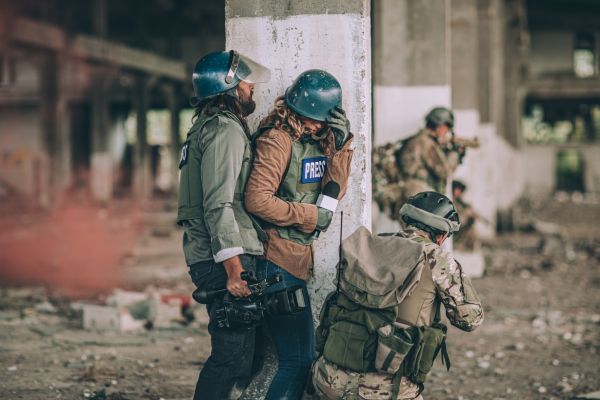
However, documentation matters. Photos, medical records, satellite images, survivor testimony, forensic reports, and digital evidence can help establish what happened. Civil society groups, journalists, lawyers, humanitarian workers, and affected communities often play a vital role in preserving the truth.
Justice after war is rarely perfect. But without accountability, violations become easier to repeat.
The Reality Gap Between Law and Life
One of the hardest truths about human rights in war zones is the gap between legal rules and lived reality. International law clearly prohibits many forms of abuse, yet civilians continue to suffer in conflicts around the world. This does not mean the law is useless. It means law needs institutions, political will, documentation, pressure, and public attention to become effective.
Legal rules can shape military training, guide humanitarian negotiations, support court cases, and create standards for judging conduct. They also give victims a language to describe harm as a violation, not merely as misfortune. That language matters.
At the same time, law alone cannot rebuild a city, heal trauma, or return a missing person. Human rights protection in war zones must therefore be practical as well as legal. It must include food, shelter, medical care, safe passage, documentation, education, and long-term recovery.
Conclusion
Human rights in war zones remind us that even during the worst human events, limits still matter. War may disrupt normal life, but it does not cancel human dignity. Civilians remain civilians. Children remain children. The wounded remain entitled to care. Prisoners remain protected from torture and humiliation.
The real test of international law is not how beautifully it speaks in peaceful times, but how firmly it stands when fear, anger, and violence take over. Protecting human rights during conflict is never easy. It requires courage from aid workers, restraint from armed actors, honesty from investigators, and persistence from communities who refuse to let suffering disappear into silence.
In the end, the protection of rights in war zones is not only a legal duty. It is a measure of how much humanity we are willing to preserve when humanity is under attack.